



Obituary: Russ Tracy
Date of Publication:
04/30/2026
As with many large NIH-funded cardiometabolic study biorepositories, the UVT Biorepository run by Russ Tracy served the CALERIE
study as its biorepository. Not only did the institution receive, store and catalog our samples, it performed much of the lab-based assays for the trials, and distributed samples until they were transferred to the NIA Research Biorepository. Perhaps most important, Russ served as a font of knowledge about how to manage a study biorepository. His most memorable and helpful statement — "The only good biorepository is an empty biorepository.

Use of Machine Learning to Identify Determinants of Habitual-Preformed Water Intake
Date of Publication:
05/01/2026
Featured Investigator:
Emma J Stinson
Publication Name:
The Journal of Nutrition
Emma J. Stinson is a Statistician at the National Institute of Diabetes and Digestive and Kidney Diseases (NIDDK) in Phoenix, Arizona, and is currently pursuing a PhD in Biomedical Informatics and Data Science at Arizona State University. Her research focuses on the development and application of statistical and data-driven methods to study metabolic health, with an emphasis on energy intake and energy expenditure. She is the lead author of a recent Journal of Nutrition publication from the CALERIE study using machine learning to identify determinants of habitual preformed water intake. Her findings showed that data-driven machine learning models can identify novel dietary and physiological factors associated with habitual preformed water intake, relationships that may be missed using traditional statistical approaches, contributing to a deeper understanding of hydration and metabolic health.

Dr. Rozalyn Anderson
Date of Publication:
01/13/2026
Dr. Rozalyn Anderson is a Vilas Distinguished Professor in the Department of Medicine in the Division of Geriatrics and Gerontology at the University of Wisconsin-Madison School of Medicine and Public Health. Dr. Anderson is Director of the NIH/NIA sponsored Wisconsin Nathan Shock Center of Excellence in the Basic Biology of Aging (WiNSC), Director of the Metabolism of Aging program, Director of the Biology of Aging and Age-Related Diseases T32 training program, and Associate Director of Research in the Geriatric Research, Education, and Clinical Center at the William S Middleton Memorial Veterans Hospital.
She is a Fellow and former Chair of the Biological Sciences section of the Gerontological Society of America and a Fellow and former President of the American Aging Association. She a recipient of the Nathan Shock New Investigator Award (GSA), the Biological Mechanisms in Aging Award (Glenn Foundation), the Breakthroughs in Gerontology Award (AFAR), and the Denham Harman Award (American Aging Association).
Dr. Anderson’s group recently published the following manuscript:
Clark JP, Rhoads TW, McIlwain SJ, Polewski MA, Pavelec DM, Colman RJ, Anderson RM. Caloric Restriction Reprograms Adipose Tissues in Rhesus Monkeys. Aging Cell. 2025 Dec;24(12):e70254. doi: 10.1111/acel.70254. Epub 2025 Oct 3. PMID: 41042069; PMCID: PMC12686577.

A 2-year calorie restriction intervention may reduce glycomic biological age biomarkers – a pilot study
Date of Publication:
08/01/2025
Featured Investigator:
Sridevi (Sri) Krishnan, M.Sc., PhD
Publication Name:
npj Aging
Sridevi (Sri) Krishnan, M.Sc., PhD is a nutritional glycobiologist who studies how diet influences the development of age-related metabolic diseases. With a foundation in nutritional biology and recent expertise in glycobiology—the science of glycosylation, glycoproteins, and glycans—Sri works in a specialized field focused on how dietary and systemic glycans impact health, aging, and disease.
As part of the molecular working group in the CALERIE2 research network, Sri contributed to a pilot study showing that calorie restriction reduces both established and novel glycomic biomarkers of aging, including those found in plasma, IgG, and complement C3. Her current research explores how calorie restriction affects the glycome of alpha-1 acid glycoprotein (AGP), a highly glycosylated protein involved in immune response and metabolic regulation. AGP has recently been identified as a leptin receptor agonist, but the role of its glycosylation in modulating function remains unknown. This study is the first to evaluate AGP glycosylation before, during, and after a long-term dietary intervention.
Future research will expand this work to assess glycomic biomarkers of aging and longevity in obese populations, the full CALERIE2 cohort, and other U.S.-based studies.
Additional projects in Sri’s lab include developing oligosaccharide-based synbiotic interventions to improve blood glucose in individuals with type 2 diabetes, and creating GenAI-powered tools to make “Food as Medicine” strategies accessible to communities experiencing food and nutrition insecurity.
Effect of caloric restriction on organ size and its contribution to metabolic adaptation: an ancillary analysis of CALERIE 2
Date of Publication:
08/19/2025
Featured Investigator:
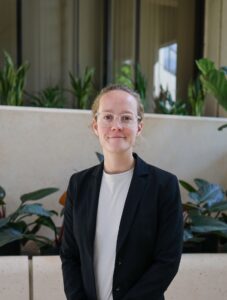
Dr. Kaja Falkenhain
Publication Name:
Scientific Reports
Dr. Falkenhain is a postdoctoral researcher at Pennington Biomedical Research Center. Her research focuses on cross-disciplinary investigations into human (patho)physiology, particularly how nutritional exposures (e.g., diets varying in macronutrients, signaling molecules such as ketones or GLP-1) affect cardiometabolic health. With training in both basic and clinical science, she aims to understand individual responses to these interventions by linking clinical outcomes to underlying mechanisms. Dr. Falkenhain currently works on two main projects: the NIH-funded Nutrition for Precision Health study aiming to develop algorithms that predict individual responses to diet, and her postdoctoral fellowship funded by the American Heart Association to explore how GLP-1RA affect gut-brain nutrient sensing.